 Skip to content


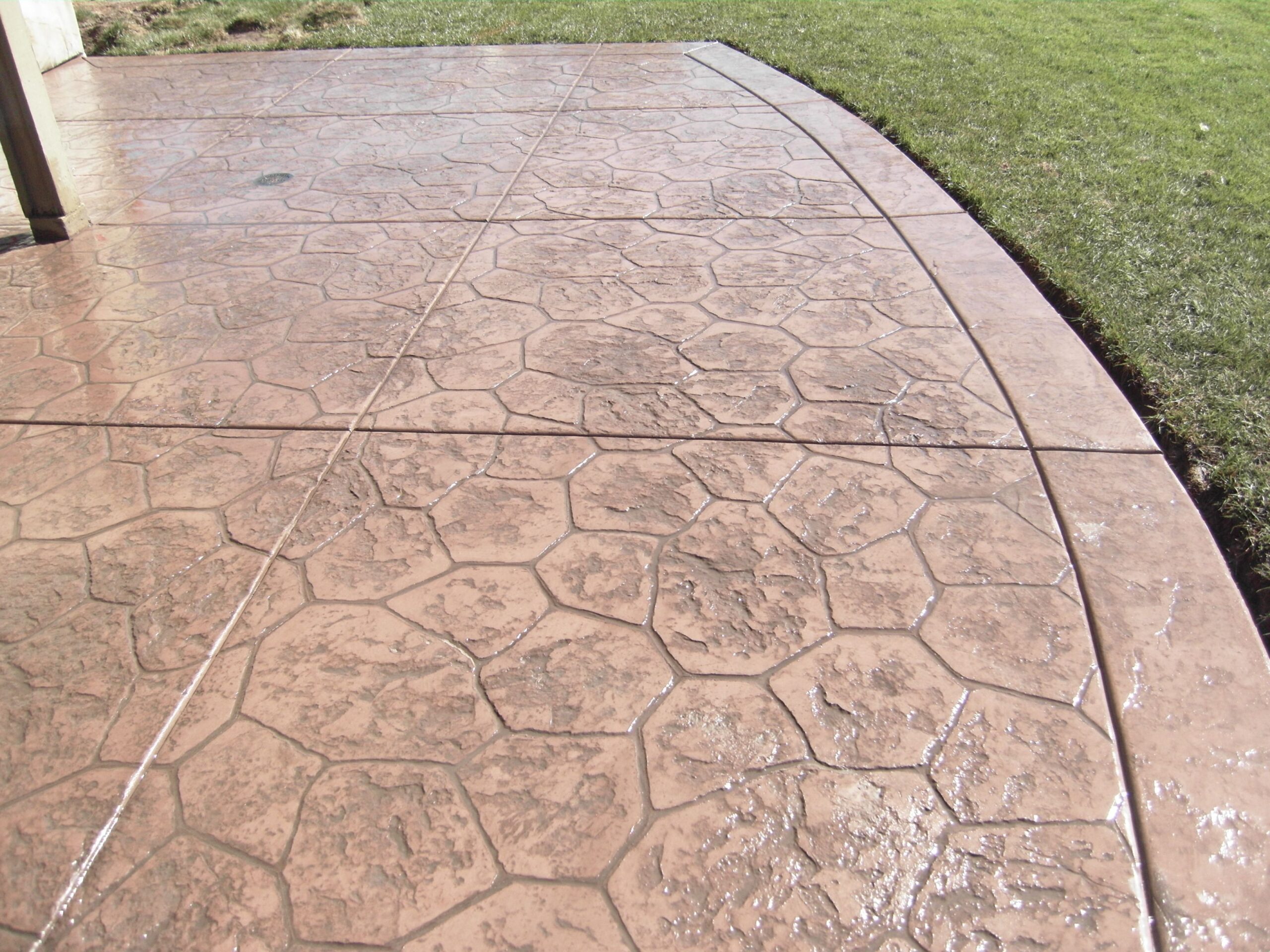
Stamped Concrete Patterns: A Complete Guide to Decorative Concrete for Your Outdoor Spaces
Estimated reading time: 12 minutes
Key Takeaways
- Stamped concrete patterns offer a cost-effective way to imitate natural materials like stone, wood, and brick with textured three-dimensional surfaces.
- Stencil concrete driveway solutions focus on smooth, flat patterns that mimic grout lines without texture depth, suited for large commercial areas.
- Choosing between stamped concrete, stencil concrete, or pavers depends on your budget, maintenance preferences, and desired aesthetics.
- Stamped concrete costs typically range from $70 to $140 per m², while stencil concrete and pavers often command higher prices.
- Maintaining decorative concrete requires periodic sealing and attention to crack repairs to ensure longevity.
Table of contents
- What is Stamped Concrete? Understanding Imprinted Design and Texture
- Overview of Stencil Concrete: Flat Patterns for Smooth Surfaces
- Detailed Comparison: Stamped Concrete vs Pavers
- Design Options: Concrete Imprint Designs and Patterns
- Cost Analysis: Understanding Stamped Concrete Cost Per m² and Alternatives
- Choosing the Right Option for Your Project: Making an Informed Decision
- Conclusion: The Benefits and Distinctions of Decorative Concrete Options
- Frequently Asked Questions
Decorative concrete has become a favourite choice for enhancing outdoor areas in both residential and commercial settings. It combines functionality with aesthetic appeal, offering durable surfaces that uplift driveways, patios, walkways, and more. Among the many decorative concrete techniques, stamped concrete patterns stand out for their ability to reproduce the look of expensive natural materials at a fraction of the cost.
Put simply, decorative concrete refers to concrete surfaces treated with patterns, textures, or colours to add visual interest and increase surface durability. This post will focus on the popular method of stamped concrete, contrasting it with stencil concrete driveway options and providing a clear understanding of concrete imprint designs available.
By the end, you’ll be equipped to decide which decorative concrete solution best suits your project needs—whether you want deep texture or flat, smooth finishes.
What is Stamped Concrete? Understanding Imprinted Design and Texture
Stamped concrete is concrete that’s freshly poured and then stamped with large polyurethane or rubber moulds before it sets. The moulds leave behind three-dimensional texture and detailed patterns directly imprinted into the surface.
This method involves several key steps:
- Concrete colouring: Pigments are mixed into the concrete or applied as colour hardeners to add depth and realism.
- Release agents: These chemicals prevent the stamps from sticking and help highlight the texture details.
- Stamping process: Large mats or blocks are pressed onto the still-wet concrete surface, imprinting the chosen pattern and texture.
Common stamped concrete patterns mimicking natural materials include:
- Ashlar slate
- Cobblestone
- Brick herringbone
- Random stone
- Wood plank
Stamped concrete is widely used for:
- Driveways that need a refined and durable finish
- Decorative patios and outdoor entertaining zones
- Walkways with custom design appeal
- Pool surrounds for slip-resistant luxury
- Commercial entrances where high-end looks are desired without the heavy price tag of natural stone
The beauty of stamping lies in its ability to imitate stone, brick, tile, or timber textures in a single, integrated surface with fewer joints. This results in a luxurious yet cost-effective finish for a vast range of outdoor applications. For concrete driveway applications and ideas, check out https://betonnconcrete.com.au/concrete-driveways-mornington-peninsula/
For more detailed insights on stamped concrete and examples of imprint designs, visit:
https://everlastservices.com.au/which-is-better-stamped-or-stenciled-concrete/
https://mossconcrete.com/pros-and-cons-of-different-concrete-finishes/
Overview of Stencil Concrete: Flat Patterns for Smooth Surfaces
Stencil concrete works differently from stamping by using flat paper or plastic stencils placed on wet concrete. These stencils create the illusion of mortar joints or grout lines, producing smooth, flat patterns resembling bricks, tiles, or pavers.
Key features of stencil concrete:
- Uses flat templates to outline joint lines without creating texture depth
- Often combined with colour hardeners or spray-on surface treatments (sometimes called spraycrete), which enhance colour uniformity and surface durability
- Typically produces a flat surface ideal for commercial sites or areas where smoothness is important
Typical applications for stencil concrete driveway and surfaces include:
- Large-area driveways where a smooth finish is preferred
- Patios and outdoor walkways needing slip resistance without raised texture
- Resurfacing existing concrete slabs to refresh and uplift appearance
Stencil concrete’s main advantage is its efficiency in covering large areas with consistent patterning. It is also a cost-effective option to refurbish aged concrete surfaces without full replacement.
For a deeper understanding of stencil concrete and its contrast to stamped surfaces, see:
https://everlastservices.com.au/which-is-better-stamped-or-stenciled-concrete/
https://www.carpetremovalsydney.com.au/what-is-the-difference-between-spraycrete-stencil-concrete-and-stamped-concrete/
https://www.concretedecor.net/departments/stamping-texturing-concrete/five-facts-regarding-the-business-of-stenciled-concrete/
Detailed Comparison: Stamped Concrete vs Pavers
When choosing outdoor surfacing, many consider stamped concrete vs pavers. Both offer decorative appeal but differ in cost, installation, and maintenance.
| Feature | Stamped Concrete | Traditional Pavers |
|---|---|---|
| Cost | Generally lower upfront cost, approx. $70–$140/m² ($7–14/ft²) for standard patterns. More complex patterns raise costs. [1][2] | Higher upfront cost due to material and labour, often exceeding stamped concrete prices. |
| Installation | Faster application as one monolithic slab. [1][2] | Labour-intensive; each paver placed individually, increasing installation time. |
| Durability | Strong but vulnerable to cracking with soil movement; requires sealing. [2] | Extremely durable; damaged pavers can be replaced individually. |
| Maintenance | Requires resealing every 2–3 years; crack repairs can be difficult and highly visible. [2] | Requires joint weeding; shifting may occur but repairs are simple by replacing units. |
| Aesthetics | Highly customisable, with broad range of colours and textures mimicking natural materials. [2] | Authentic texture, but less variety in continuous pattern designs. |
Stamped concrete advantages:
- Broad design selection including stone, wood, tile lookalikes
- Cost-effective alternative to natural stone or brick
- Smooth, seamless surface with fewer joints
Stamped concrete disadvantages:
- Less authentic “feel” than actual stone or pavers
- Can be slippery when wet unless anti-slip additives are used
- Difficult and costly to repair cracks seamlessly
For detailed comparisons, please refer to:
https://everlastservices.com.au/which-is-better-stamped-or-stenciled-concrete/
https://mossconcrete.com/pros-and-cons-of-different-concrete-finishes/
https://www.concretedecor.net/departments/stamping-texturing-concrete/five-facts-regarding-the-business-of-stenciled-concrete/
Design Options: Concrete Imprint Designs and Patterns
The versatility of concrete imprint designs with stamped concrete is vast. Thanks to specialised moulds, colouring pigments, and release agents, you can personalise colour depth, texture, and pattern intricacy.
Popular concrete imprint designs include:
- Natural stone effects: slate, flagstone, cobblestone
- Brick patterns, including herringbone and running bond
- Wood plank lookalikes, replicating timber grain and knots
- Tile and geometric motifs
- Custom logos, medallions, or bespoke artwork embedded in the surface
These options offer a high degree of customisation suitable for creating unique outdoor areas—from heritage-style patios to contemporary commercial frontages.
On the other hand, stencil concrete driveway patterns are typically limited to flatter patterns such as:
- Brick outlines
- Slate and tile grids
- Simple geometric shapes
While stencil designs lack the three-dimensional depth of stamped concrete, they are effective for large, slip-resistant surfaces requiring a smooth finish, such as commercial walkways and driveways.
For more inspiration on pattern possibilities, visit:
https://mossconcrete.com/pros-and-cons-of-different-concrete-finishes/
https://www.concretedecor.net/departments/stamping-texturing-concrete/five-facts-regarding-the-business-of-stenciled-concrete/
Explore more creative concrete driveway ideas and colour options here: https://betonnconcrete.com.au/coloured-concrete-ideas-outdoor
Cost Analysis: Understanding Stamped Concrete Cost Per m² and Alternatives
Cost is a critical factor in choosing decorative concrete surfaces. Here’s an overview of typical price structures:
- Stamped concrete cost per m² generally ranges from $70 to $140 ($7–14/ft²) for standard patterns. Complex designs, multi-coloured pigments, or specialty finishes can drive this higher.
- Lifecycle costs include resealing every 2–3 years and potential expense for crack repairs to maintain aesthetics and durability.
- Stencil concrete driveway installations typically cost $150 to $300 per m² ($15–30/ft²), reflecting the detailed colour layering and stencil intricacy, especially for retrofit applications on existing slabs.
- Pavers often have the highest initial costs due to expensive materials and labour but may offer cost savings in maintenance by easy replacement of damaged units.
Keep in mind that regional labour rates, materials supply, and project complexity cause prices to vary widely.
For more on driveway cost budgeting and pricing in Australia, see https://betonnconcrete.com.au/concrete-driveway-cost-australia
Sources for cost reference:
https://everlastservices.com.au/which-is-better-stamped-or-stenciled-concrete/
https://mossconcrete.com/pros-and-cons-of-different-concrete-finishes/
Choosing the Right Option for Your Project: Making an Informed Decision
Selecting between stamped concrete patterns, stencil concrete driveway options, or pavers depends on several critical factors:
Project requirements
- Choose stamped concrete if your priority is maximum realism and visual depth, closely resembling natural stone, wood, or slate. Ideal for aesthetics-focused residential driveways, patios, and pool surrounds.
- Opt for stencil concrete for flatter, even surfaces with slip resistance, especially on commercial or high-traffic areas, or when resurfacing existing concrete slabs. Its smooth finish is perfect where texture is a concern.
Budget considerations
- Stamped concrete tends to be more affordable for decorative detail and surface integration.
- Stencil concrete can cost more per square metre, particularly for complex designs or when replacing existing slabs.
- Pavers have higher upfront costs but can afford budget flexibility due to their repair-friendly modularity.
Maintenance and longevity
- All decorative concrete surfaces need resealing every 2–3 years to protect colour and finish.
- Stencilled surfaces often require less maintenance to keep slip resistance intact.
- Stamped concrete may demand anti-slip additives where wet conditions are common and careful attention to crack repairs.
Evaluate lifestyle, intended use, and how much ongoing care you wish to commit.
For tips on maintaining concrete driveways and extending their lifespan, visit https://betonnconcrete.com.au/concrete-driveway-maintenance-tips
Always consult seasoned professionals who understand your local conditions and project goals for the best advice and installation practices.
Further guidance:
https://everlastservices.com.au/which-is-better-stamped-or-stenciled-concrete/
https://www.concretedecor.net/departments/stamping-texturing-concrete/five-facts-regarding-the-business-of-stenciled-concrete/
Conclusion: The Benefits and Distinctions of Decorative Concrete Options
Stamped concrete patterns provide cost-effective, visually stunning alternatives to natural stone, tile, or wood, enabling tailored designs for driveways, patios, and commercial settings. Their textured, three-dimensional surfaces deliver high impact with fewer seams.
In comparison, stencil concrete driveway finishes are ideal for flat, uniform appearances suited to commercial and resurfacing projects, offering efficient application methods and excellent slip resistance.
Pavers remain a premium choice for authentic texture and easy repairability but come with higher upfront price tags and longer installation times.
When deciding, weigh your priorities on:
- Desired surface texture and style
- Budget constraints and long-term maintenance plans
- Application environment and slip resistance needs
Consult with experienced installers to ensure your decorative concrete investment meets both style and performance expectations.
By understanding the characteristics, costs, and applications of stamped concrete, stencil concrete, and pavers, you can confidently choose the best option for a stunning, durable outdoor surface.
Frequently Asked Questions
- What is the difference between stamped and stencil concrete?
- How long does stamped concrete last?
- Is stamped concrete slippery when wet?
- Can cracked stamped concrete be repaired?
- How much does stamped concrete cost per square meter?
What is the difference between stamped and stencil concrete?
Stamped concrete features three-dimensional textures and patterns pressed into wet concrete, mimicking natural materials with depth. Stencil concrete uses flat stencils to create surface patterns without texture, resulting in smoother finishes often preferred for commercial applications.
How long does stamped concrete last?
With proper maintenance including resealing every 2–3 years, stamped concrete can last 15-25 years depending on installation quality and site conditions.
Is stamped concrete slippery when wet?
It can be. Adding anti-slip additives to the surface or using textured stamps helps improve slip resistance, especially around pool areas or high-traffic zones.
Can cracked stamped concrete be repaired?
Minor cracks can be repaired but ensuring seamless blending with the original pattern is challenging and costly. Prevention through proper base preparation and sealing is preferable.
How much does stamped concrete cost per square meter?
Standard stamped concrete costs range from $70 to $140 per m², though prices vary by pattern complexity, colour options, and region. For more pricing details see https://betonnconcrete.com.au/concrete-driveway-cost-australia.